

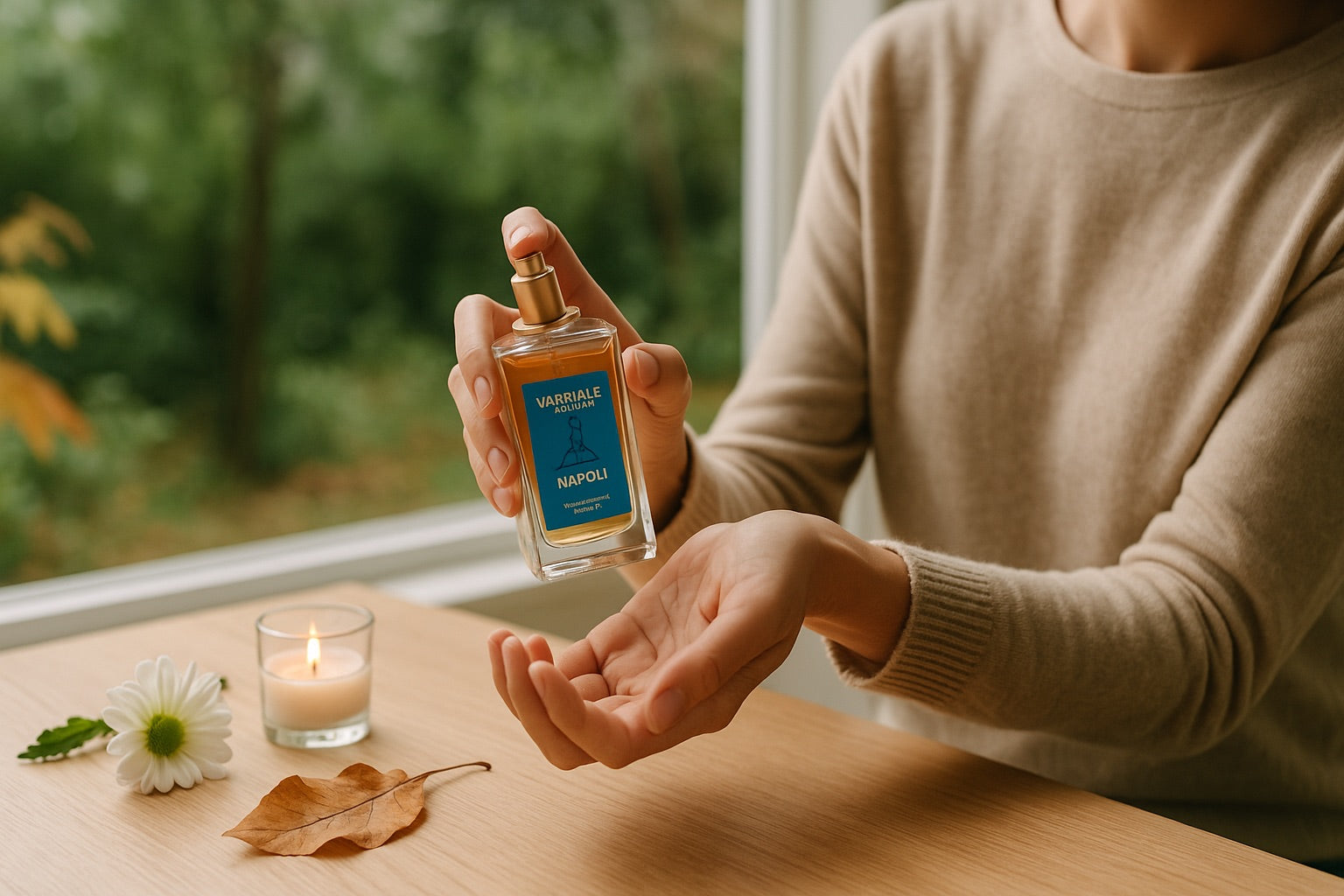
September 21st marks the arrival of the Autumn Equinox , the moment when light and darkness reach the same balance. It's a moment that nature gives us twice a year and that perfectly symbolizes the search for harmony: between day and night, between the fading summer and the approaching winter, between lightness and depth.
In this evocative setting, the world of perfume also finds its most powerful metaphor. A perfume is, in fact, an invisible balance between raw materials, emotions, and memory . But today, in the age of environmental awareness, it is also a balance between personal pleasure and collective responsibility .
It's no longer just about what fragrance to wear, but how that fragrance is created:
-
Where do the ingredients come from?
-
What is the environmental and social impact of production?
-
Is the packaging recyclable or refillable?
-
Are the communities involved respected?
This article was created to accompany you on a conscious olfactory journey. We'll discuss the meaning of "sustainable perfume," the myths to dispel, the industry's new eco-friendly practices, and how even an artistic brand like Varriale Profumi fits into this vision, remaining true to its DNA: "We don't make perfumes, we make tattoos on the skin."
What does sustainable perfume mean?
The word "sustainability" is overused. But in the world of perfumery, it has a precise meaning that goes far beyond the "natural" label.
A perfume is sustainable when it takes into account its global impact :
-
Environment : raw materials grown without destroying ecosystems, recyclable and refillable packaging.
-
People : respect for workers' rights, transparent supply chains, supported local communities.
-
Health : safe use of ingredients, compliance with IFRA (International Fragrance Association) standards .
-
Consumer education : transparency in communication, clarity between real claims and greenwashing.
Concrete examples of sustainability in perfumery
-
Guerlain : uses organic beetroot alcohol, refillable bottles, and supports bee protection projects.
-
Sana Jardin : develops upcycling projects for flowers used in industry and supports women in producing countries.
-
Clean Reserve : “farm-to-fragrance” positioning, eco-friendly packaging and partnerships with environmental organizations.
These examples demonstrate that today it is not enough to have a beautiful perfume to wear: an ethical soul is also needed.
Ingredients: natural or synthetic?
One of the most debated topics concerns the difference between natural and synthetic perfumes.
The false myths
-
Natural = better. Not always: some natural essential oils can cause allergies or have a significant environmental impact (e.g., rare woods).
-
Synthetic = harmful. False: Many synthetic molecules are safe, IFRA certified, and reduce pressure on scarce natural resources.
The truth
The real difference is not natural or synthetic, but responsible or irresponsible .
-
A synthetic molecule can replace a rare ingredient (such as natural musk or ambergris) reducing the environmental impact.
-
A natural extract can be sustainable if grown ethically and traceably.
Contemporary artistic perfumery is called to integrate both paths, always choosing the most transparent and respectful one .
Cruelty-free perfumes: European legislation
Many people are looking for "cruelty-free" perfumes. But you should know that in Europe, testing cosmetics on animals has been banned since 2013 .
This means that, effectively, every perfume legally sold in the EU is cruelty-free.
The difference lies in the additional claims:
-
Vegan → no ingredients of animal origin (e.g. honey, natural musk, ambergris).
-
Certifications such as Leaping Bunny or Vegan Society to strengthen credibility.
For Italian and European consumers, therefore, the crucial question is not whether a perfume is cruelty-free (it already is by law), but whether it contains ingredients of animal origin and what philosophy the brand adopts.
Packaging and refills: towards circularity
Packaging is one of the most visible aspects of sustainability. The beauty industry produces millions of tons of packaging waste every year, which is often difficult to dispose of.
The new frontiers of packaging
-
Recyclable → glass, FSC paper, separable plastic.
-
Refillable → bottles that can be reused infinitely (e.g. Guerlain, Dior Sauvage, Armani My Way).
-
Minimalist → reduction of unnecessary packaging.
A refillable perfume can reduce waste by up to 60% compared to a disposable bottle. It's a simple choice, but one with a big impact.
Social impact: perfume that's good for people too
Sustainability is not just about the environment, but also the communities involved.
-
Fair trade and traceability → some essences come from cultivation in developing countries. Ensuring fair wages and decent conditions means transforming perfume into a tool for progress.
-
Upcycling → reusing flowers or by-products of agricultural production to reduce waste.
-
Educational projects → support for local communities with schools, healthcare, and training.
A virtuous example is Sana Jardin , whose projects support the economic independence of flower pickers in Morocco.
Sustainable perfumes and longevity: a necessary compromise?
One of the most common fears is: “Does a sustainable perfume last less?”
The answer is no, if the formulation is done competently.
-
Many eco-friendly synthetic ingredients have high persistence.
-
Some intense naturals (patchouli, oud, resins) guarantee scents that last over 8 hours.
-
The secret lies in the balance between volatile molecules and persistent base notes.
An ethical perfume is not a compromise: it can be as long-lasting, elegant and enveloping as (if not more than) a traditional perfume.
How to Choose a Sustainable Perfume: A Practical Guide
-
Read the label → find information on ingredients, packaging, and certifications.
-
Verify transparency → serious brands explain their supply chain, not just slogans.
-
Look at the packaging → is it recyclable? Refillable? Minimal?
-
Consider the social impact → does the brand support communities or ethical projects?
-
Try the fragrance → it's not enough to be sustainable: it must excite you, persist, and express who you are.
Where does Varriale Profumi fit in?
Varriale Profumi was born with the idea of combining artistic intensity and accessible luxury .
For our brand, sustainability means:
-
Quality of raw materials → carefully selected precious essences.
-
Persistence → a perfume that lasts longer reduces consumption and waste.
-
Awareness → educating people to make sensible and responsible choices.
-
Fair price → democratize luxury, without speculation.
Each bottle is a conscious and sensorial gesture: not a simple perfume, but a tattoo on the skin .
FAQ – Frequently Asked Questions
What does sustainable perfume mean?
A perfume that takes into account the environment, people, and safety throughout the entire supply chain.
Do natural perfumes last less?
Not always: it depends on the formula. Patchouli, oud, and natural resins have great longevity.
Can an artistic perfume be sustainable?
Absolutely yes: creativity and ethics can coexist.
How to recognize an ethical brand?
Transparency, traceability, recyclable packaging, responsible supply chain.
Is cruelty-free a guarantee in Europe?
Yes: all perfumes sold legally in the EU have been legal since 2013.
Find out more
Do you want to experience perfume with new awareness?
Discover the Varriale collections and let yourself be guided by leather and nature:
Conclusion
Just as the equinox balances light and darkness, so the perfumery of the future must find a balance between pleasure and responsibility.
Choosing a sustainable perfume doesn't mean sacrificing intensity or sensuality, but experiencing the fragrance with a deeper awareness: every spray becomes a gesture that benefits the skin, the senses, and the world.
Varriale Perfumes
– We don't make perfumes, but skin tattoos.


